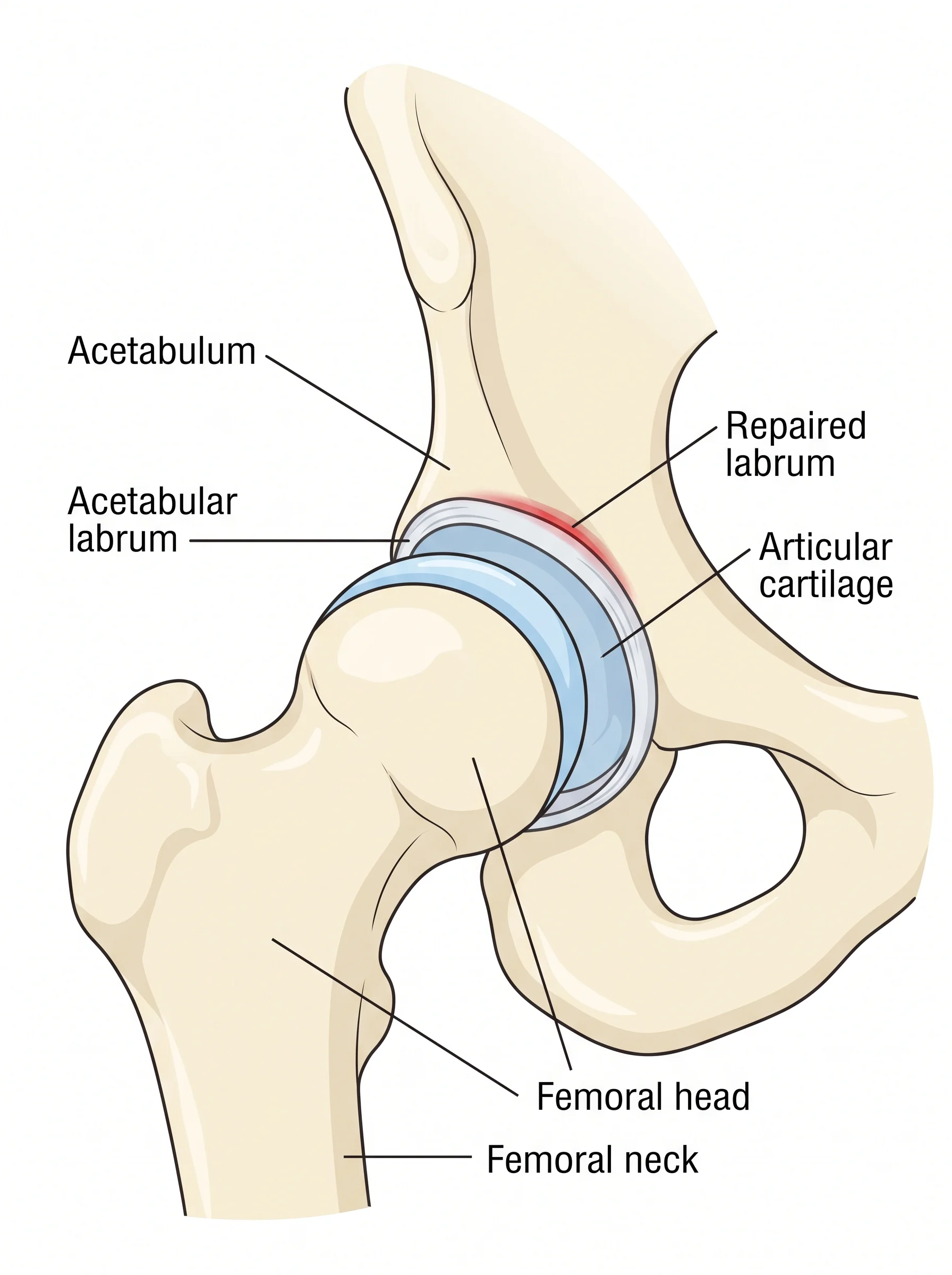
Hip labral repair is surgery that reattaches or restores the torn cartilage ring around the hip socket, usually through arthroscopy. Dr. Wodicka performs hip labral repair in Fort Lauderdale for select patients whose labral tear symptoms have not improved with non-surgical care such as therapy and activity changes.
Ross Wodicka performs hip labral repair in Fort Lauderdale when it is the right step, and reviews every alternative with you first.
What is Hip Labral Repair?
Hip labral repair is a procedure that fixes a torn labrum, the ring of cartilage around the rim of the hip socket.
The labrum deepens the socket, helps hold the joint together, and cushions movement, so a tear can cause pain and catching.
The repair is most often done with arthroscopy, a technique that uses a small camera and thin instruments through tiny incisions. Rather than removing the labrum, the surgeon reattaches the torn part to the bone with small anchors so it can heal in place.
When a tear is linked to the shape of the bones, called impingement, the bone is often reshaped during the same surgery so the repair is not pinched again. The goal is to relieve symptoms and keep the labrum working.
What happens during Hip Labral Repair, step by step?
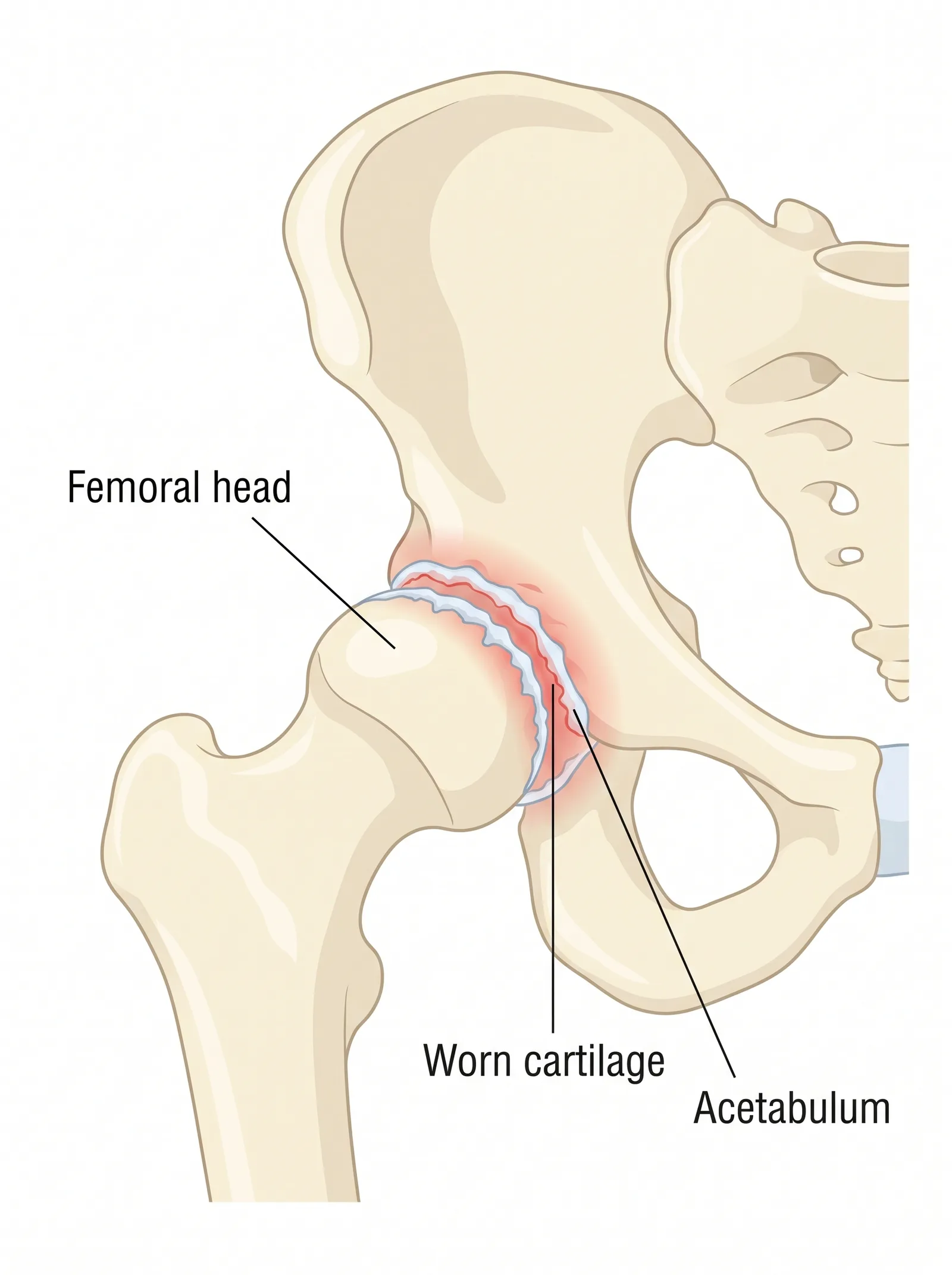
During a hip labral repair, the surgeon uses arthroscopy to see inside the joint.
The camera and thin instruments are placed through small incisions. The surgeon examines the tear and, when the tissue is suitable, reattaches it to the rim of the socket using small anchors placed in the bone, with sutures that hold the labrum in position while it heals.
If impingement is present, the extra bone is reshaped in the same procedure so the repaired labrum is protected. In some tears, the tissue is too damaged to reattach and is instead trimmed or reconstructed; the plan is confirmed based on what is found.
What is recovery like after Hip Labral Repair?
Recovery from hip labral repair happens in stages.
Many people use crutches for a period to protect the repair, sometimes with a brace or limits on certain motions. Physical therapy is central and usually continues for a number of weeks. Returning to low-impact activity commonly takes about 3 to 6 months, with sports often later, according to general guidance from the American Academy of Orthopaedic Surgeons. These are ranges, not promises. Your timeline depends on the repair, your health, and your rehabilitation. Your surgical team will map it with you.
Read the full guide to preparing for surgery →
Your own recovery instructions come from the office and are specific to you. This page describes the general course, not a plan to follow.
What do patients ask most?
What is the difference between labral repair and labral debridement?+
How long is recovery after hip labral repair?+
Will the labrum tear again after repair?+
Is labral repair done with open surgery or arthroscopy?+
What are the treatment options?
- 01Rest and activity changes to avoid the movements that trigger painRest and activity changes to avoid the movements that trigger pain.
- 02Physical therapy to strengthen the hip and core and improve movementPhysical therapy to strengthen the hip and core and improve movement.
- 03Anti-inflammatory medication, when appropriate and reviewed with your physicianAnti-inflammatory medication, when appropriate and reviewed with your physician.
- 04A guided injection into the joint to reduce pain and help confirm the sourceA guided injection into the joint to reduce pain and help confirm the source.
- 05Hip labral repair, considered when non-surgical care does not relieve symptoms and the teaHip labral repair, considered when non-surgical care does not relieve symptoms and the tear is suited to repair.
Fellowship trained at Southern California Orthopedic Institute, Los Angeles (Sports Medicine). Sees patients in Fort Lauderdale.
About Dr. Wodicka →