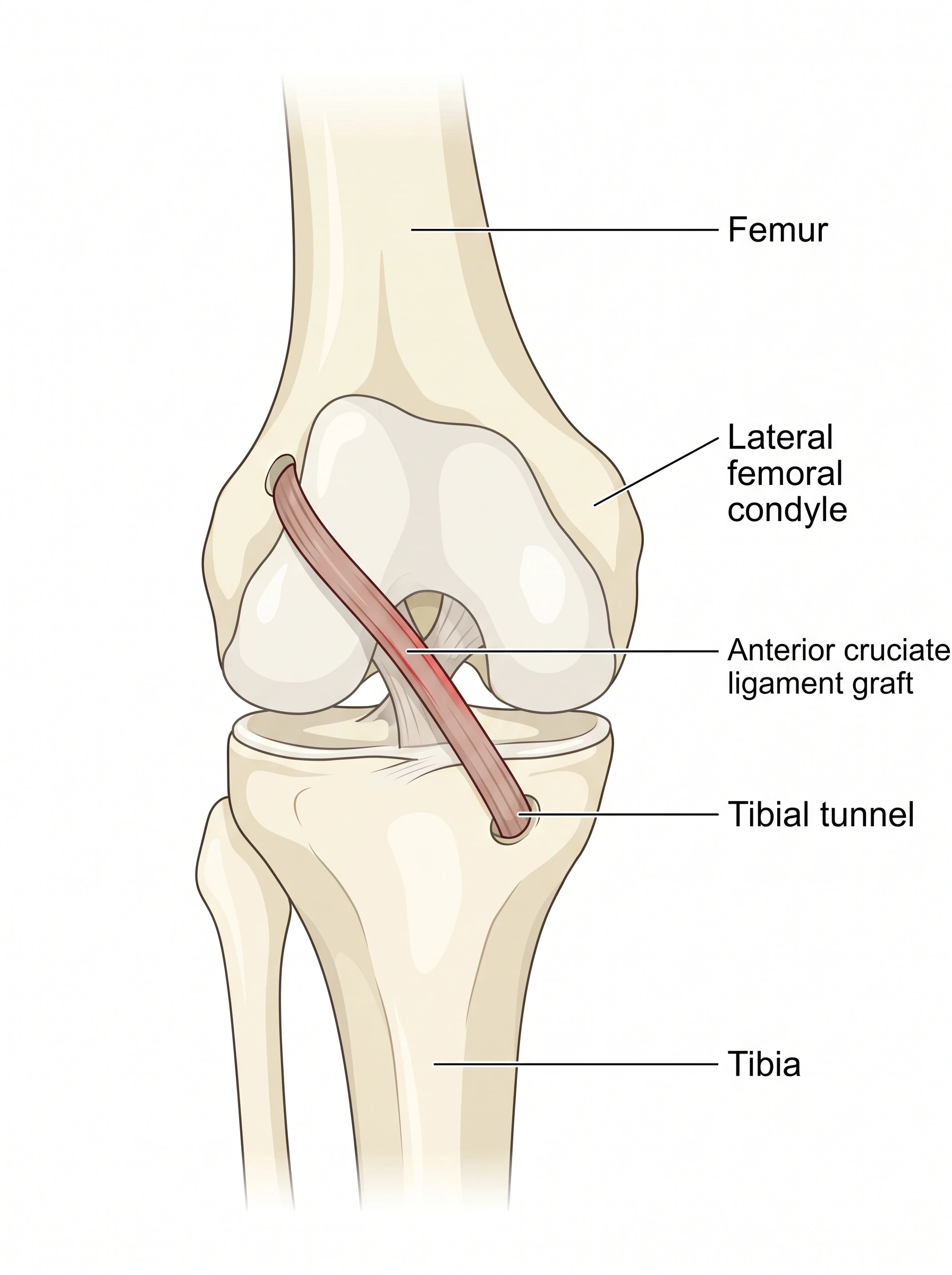
Dr. Wodicka evaluates and treats knee osteoarthritis in Fort Lauderdale, the gradual wearing of the cartilage that cushions the knee joint. Care begins with non-surgical options such as activity changes, physical therapy, and injections. When those stop working, knee replacement is one option discussed with each patient.
Ross Wodicka diagnoses and treats knee osteoarthritis in Fort Lauderdale, from the first visit through recovery.
What is Knee Osteoarthritis?
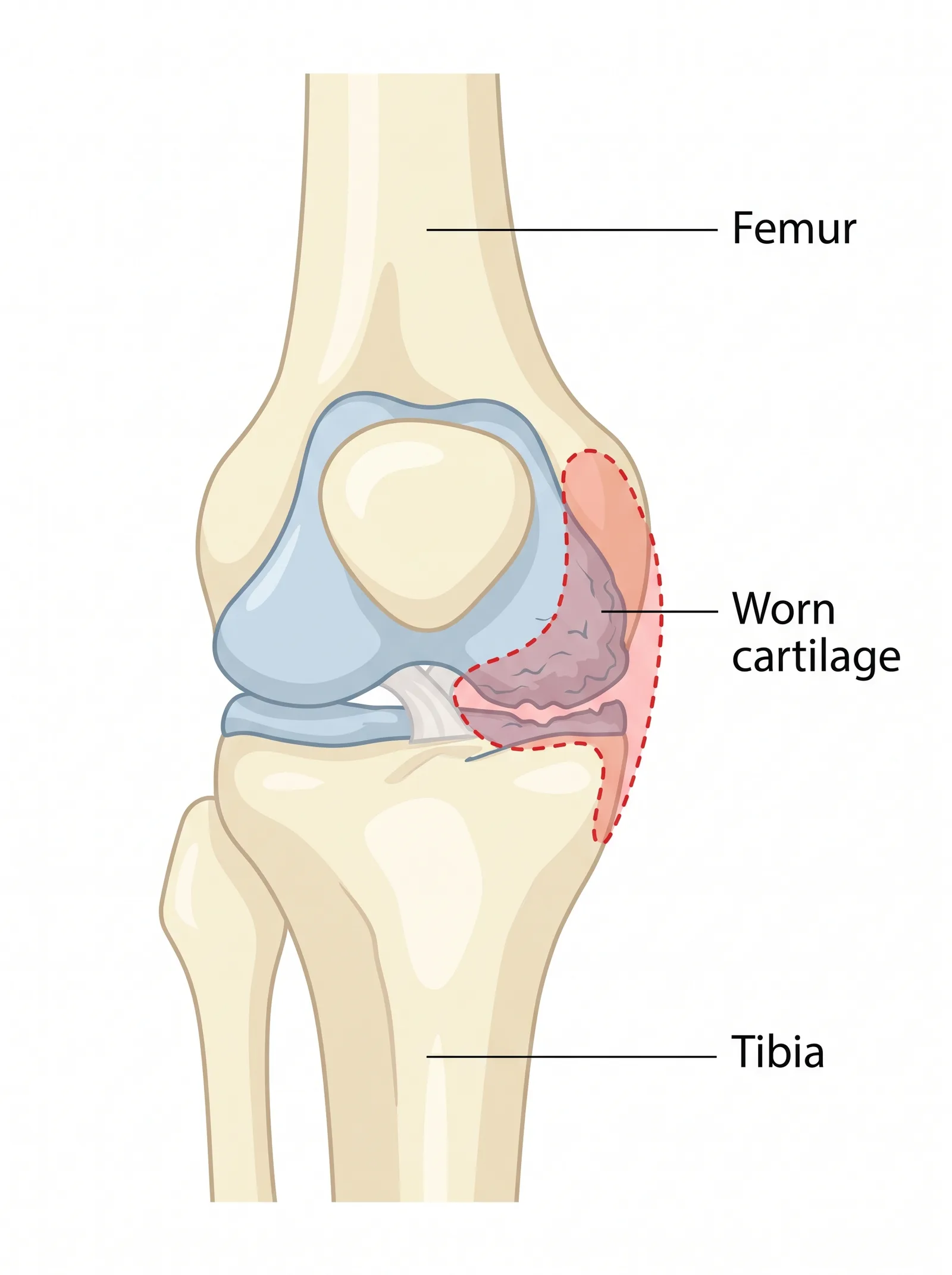
Knee osteoarthritis is the slow breakdown of cartilage, the smooth tissue that lets the bones of the knee glide against each other.
As cartilage thins, the bones carry more load and the joint becomes stiff and sore.
Most people notice it over months or years. Common signs are pain with stairs, stiffness after sitting, aching after activity, and swelling. Some feel a grinding sensation, called crepitus, when the knee moves.
Arthritis cannot be reversed, but symptoms can often be managed for a long time. The goal of care is to keep you moving comfortably and to delay or avoid surgery when reasonable.
How is Knee Osteoarthritis diagnosed, and what does the visit involve?
Diagnosis starts with your history and a physical exam of how the knee bends, straightens, and bears weight.
Weight-bearing X-rays show the space between the bones and how much cartilage has worn. Magnetic resonance imaging, an MRI scan that shows soft tissue, is sometimes added to check the meniscus or ligaments.
What is recovery like for Knee Osteoarthritis?
Many people manage knee osteoarthritis for years with non-surgical care.
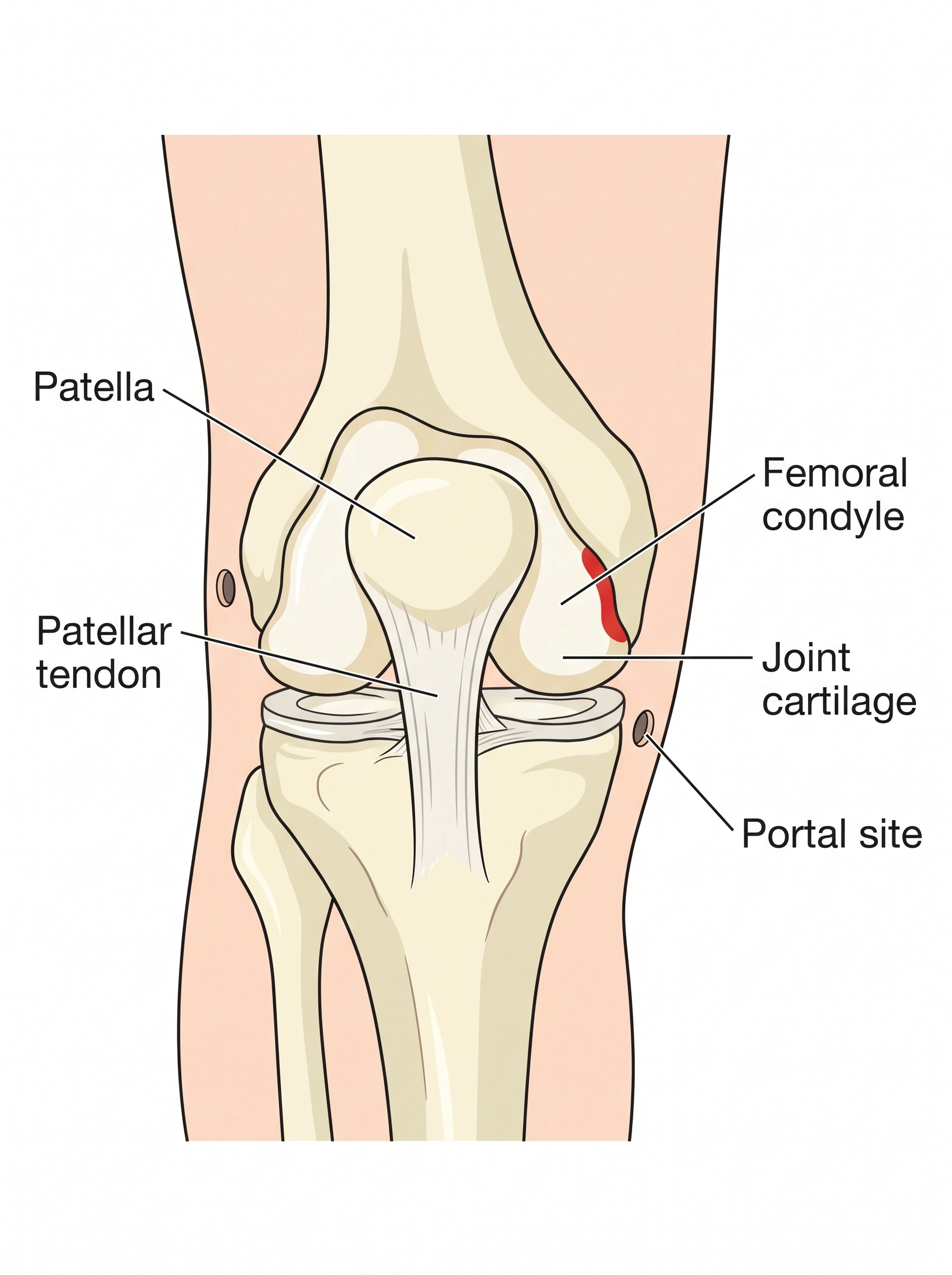
When pain limits daily life and imaging shows advanced wear, Dr. Wodicka will talk through whether partial or total knee replacement fits your goals. There is no single timeline; the right step depends on your symptoms, not your X-ray alone.
What do patients ask most?
Does knee arthritis always lead to surgery?+
What is the difference between osteoarthritis and rheumatoid arthritis?+
Will walking make my knee arthritis worse?+
How do I know when it is time for a knee replacement?+
What are the treatment options?
- 01Activity changes and weight management to lower the load on the jointActivity changes and weight management to lower the load on the joint.
- 02Physical therapy to strengthen the muscles that support the kneePhysical therapy to strengthen the muscles that support the knee.
- 03Anti-inflammatory medicine when appropriate, guided by your physicianAnti-inflammatory medicine when appropriate, guided by your physician.
- 04A knee brace or an off-loading sleeve for supportA knee brace or an off-loading sleeve for support.
- 05Injections, such as corticosteroid to calm inflammation or hyaluronic acid for lubricationInjections, such as corticosteroid to calm inflammation or hyaluronic acid for lubrication.
- 06Joint replacement, considered only when non-surgical care no longer controls symptomsJoint replacement, considered only when non-surgical care no longer controls symptoms.
Fellowship trained at Southern California Orthopedic Institute, Los Angeles (Sports Medicine). Sees patients in Fort Lauderdale.
About Dr. Wodicka →