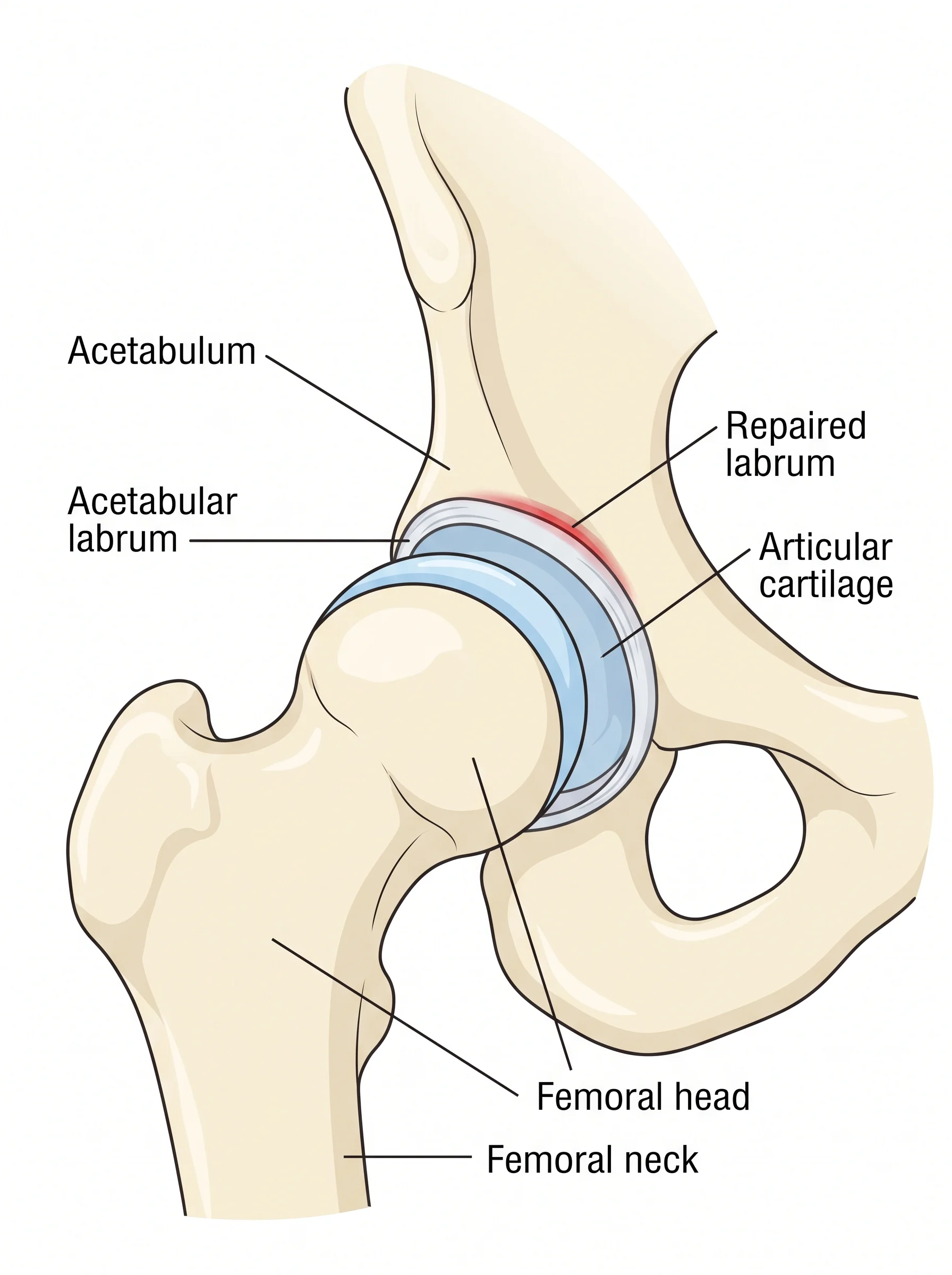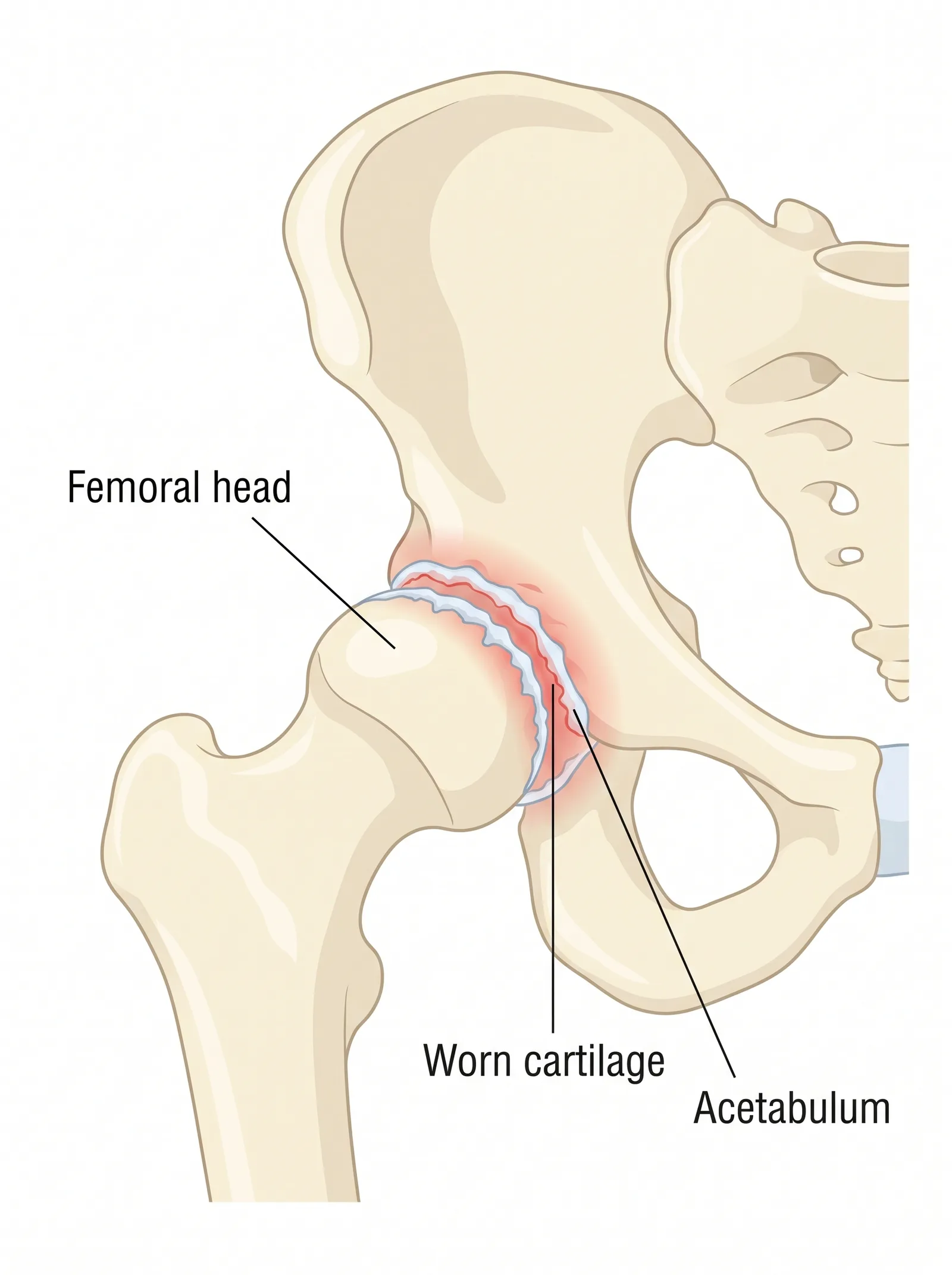
Hip osteoarthritis is the slow wearing of the smooth cartilage inside the hip joint, which leads to pain, stiffness, and reduced motion. Dr. Wodicka evaluates hip arthritis in Fort Lauderdale and treats it with a range of options, starting with non-surgical care and moving to surgery only when it is the right step.
Ross Wodicka diagnoses and treats hip osteoarthritis in Fort Lauderdale, from the first visit through recovery.
What is Hip Osteoarthritis?
Hip osteoarthritis is the gradual breakdown of cartilage, the smooth tissue that caps the ends of the bones so the joint glides.
When that cartilage thins, the ball and socket of the hip begin to rub, which causes pain and stiffness. It usually develops over years.
Most people first notice a deep ache in the groin or the front of the thigh. Pain often shows up when standing after sitting, walking longer distances, or putting on shoes and socks. Some people feel grinding or catching, and the hip may feel stiff in the morning.
Arthritis cannot be reversed, but many people manage it well for a long time with the right plan. The goal of care is to reduce pain, keep the hip moving, and protect your daily activity.
How is Hip Osteoarthritis diagnosed, and what does the visit involve?
Hip osteoarthritis is diagnosed through a conversation about your symptoms, a physical exam, and imaging.
During the exam, your physician checks how far the hip moves and where the pain sits. X-rays show the space between the bones; a narrowing space and bone spurs are common signs of arthritis. In some cases, an MRI, a scan that shows soft tissue in detail, is used to look at cartilage and rule out other causes.
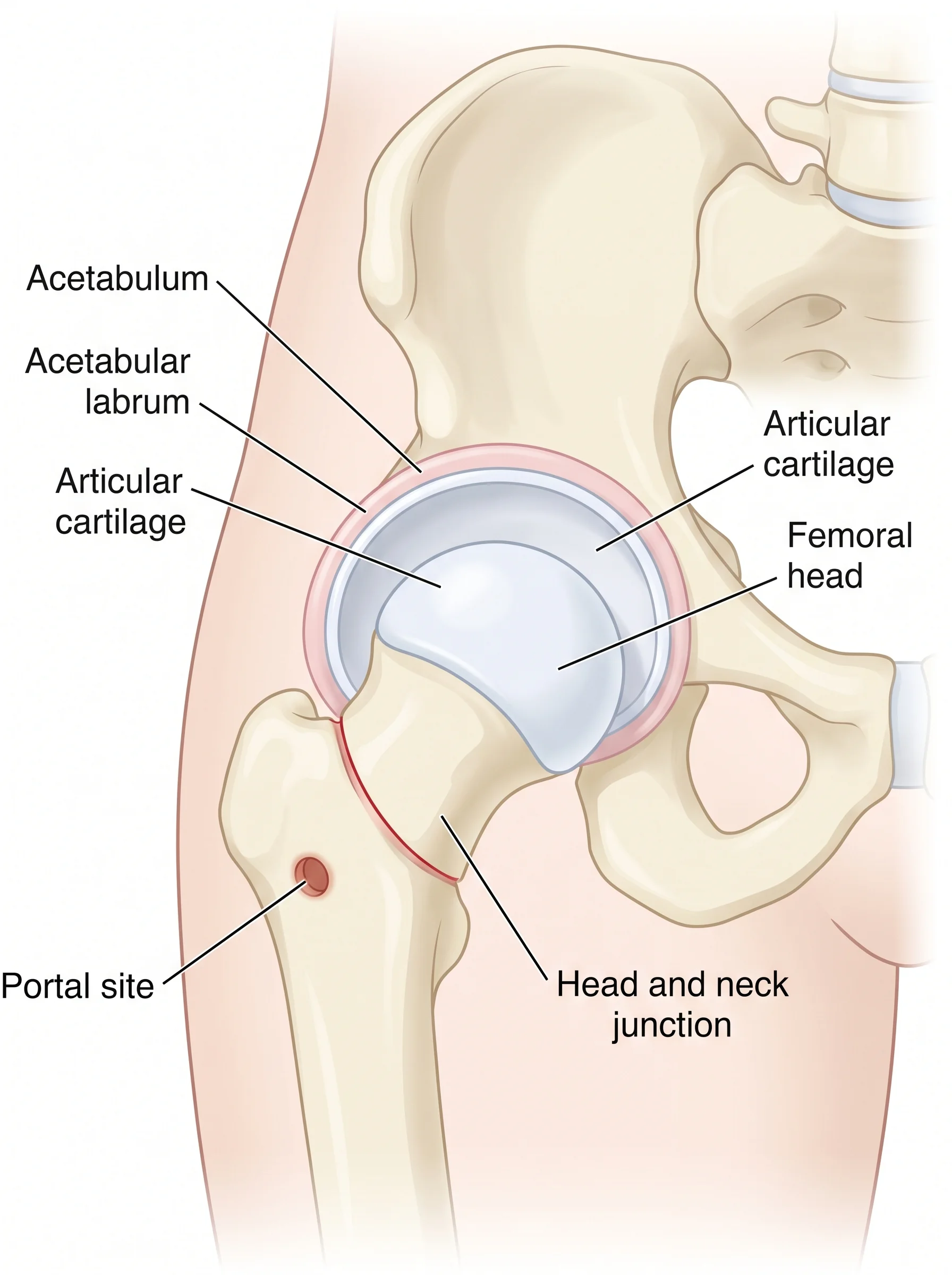
What is recovery like for Hip Osteoarthritis?
Care for hip arthritis is usually a long partnership, not a single visit.
Many people control symptoms for years with exercise, weight management, and medication. When those stop working and pain limits walking, sleep, or daily tasks, a conversation about hip replacement becomes reasonable. There is no fixed point at which surgery is required; the decision is based on how much the hip affects your life. Your physician will map the options with you.
What do patients ask most?
Is hip arthritis the same as hip pain?+
Can hip arthritis be cured without surgery?+
What activities should I avoid with hip arthritis?+
How fast does hip arthritis get worse?+
What are the treatment options?
- 01Activity changes and low-impact exercise, such as swimming or cycling, to keep the joint mActivity changes and low-impact exercise, such as swimming or cycling, to keep the joint moving without heavy loading.
- 02Weight management, which lowers the force that passes through the hip with each stepWeight management, which lowers the force that passes through the hip with each step.
- 03Physical therapy to strengthen the muscles around the hip and improve motionPhysical therapy to strengthen the muscles around the hip and improve motion.
- 04Anti-inflammatory medication, when appropriate and reviewed with your physicianAnti-inflammatory medication, when appropriate and reviewed with your physician.
- 05A cane or other walking aid to reduce load on the jointA cane or other walking aid to reduce load on the joint.
- 06Corticosteroid injections, a shot of anti-inflammatory medicine into the joint, for temporCorticosteroid injections, a shot of anti-inflammatory medicine into the joint, for temporary relief.
- 07Hip replacement surgery, considered when the steps above no longer control pain and dailyHip replacement surgery, considered when the steps above no longer control pain and daily life is limited.
Fellowship trained at Southern California Orthopedic Institute, Los Angeles (Sports Medicine). Sees patients in Fort Lauderdale.
About Dr. Wodicka →